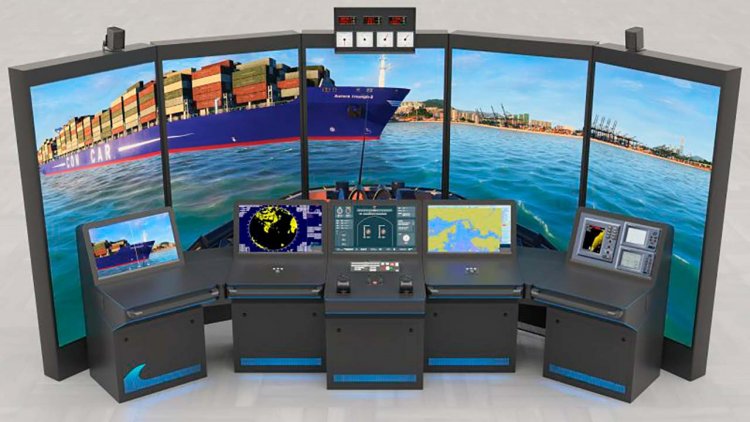
Nippon Yusen Kaisha (NYK) has opened a training centre with simulators in Akita, Japan to train crew for offshore windfarm projects
The Offshore Wind Training Centre has facilities for teaching technical personnel and workboat crews essential skills for manoeuvring vessels, engineers and supplies to wind turbines and foundations in offshore windfarms.NYK expects this to be a focal point for specialised training in offshore wind installations at a time when Japan is implementing its first renewable energy projects.
Its main facility is a full-mission bridge simulator tailored for offshore wind operations, supplied by Damen Services and VStep Simulation.
“This simulator provides the means for fleet owners in the Asia-Pacific region with the opportunity to safely test and train their crews in various ship designs, including the Damen fast crew supplier FCS 2710,” said Damen regional service manager for Asia-Pacific, Bastin Kubbe.
This full-mission bridge simulator completed factory acceptance testing in October and was then installed at the Japanese training centre.
“This simulator is designed to replicate real-world scenarios, its advanced capabilities offer a comprehensive training experience,” said NYK energy division’s executive officer and senior general manager Tsutomu Yokoyama.
“Its integration into the training centre underscores NYK-Line’s commitment to excellence in the offshore wind sector.”
The centre in Akita will be officially inaugurated on 1 April. It was built with NYK in a consortium with Damen Services that goes beyond providing these training facilities.
Both companies engage in collaborative initiatives with local governmental bodies and educational institutions to actively contribute to offshore human resource development.
“The strategic focus of this project is on expanding the offshore wind industry,” said Damen regional sales director for Asia Pacific, Thomas Röwekamp. “It also looks to ensure a skilled workforce.”
AR Simulator Added to Pilot Training at Smartship Australia
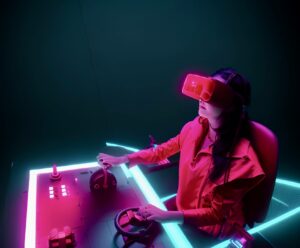
Force Technology won a deal to deliver its SimFlex4 AR solution as part of an extensive upgrade for the Queensland-based maritime simulation and training facility, Smartship Australia, which focuses on professional pilotage training and development. Smartship’s facility in Brisbane includes five marine simulators, including two full mission bridges, one Tug bridge, and two-part task simulators.
FORCE Technology’s SimFlex simulator was originally selected when Smartship Australia was first established in 2011. Since then, the facility has supported every significant port development project in Queensland. Smartship Australia also delivers services to other states in Australia as well as international customers in New Zealand, Papua New Guinea, Indonesia, and Thailand.
The simulation center upgrade commenced in October 2023 and will result in the installation and commissioning of an augmented-reality (AR) simulator in the first quarter of 2024. The simulator platform is ready for FORCE Technology’s upcoming DEN-Mark2 mathematical model release in 2024, which will offer unprecedented model accuracy as well as enhanced line forces calculations, a major advantage when operating with tugboats and conducting advanced mooring studies, for example. In use for more than 35 years, the DEN-Mark1 mathematical model is renowned for its accuracy, but DEN-Mark2 will introduce a major technology leap in fidelity and physical capabilities.
Wärtsilä to supply simulator to NSB Group
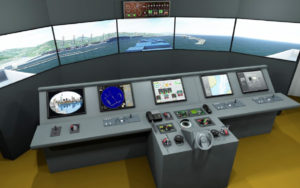
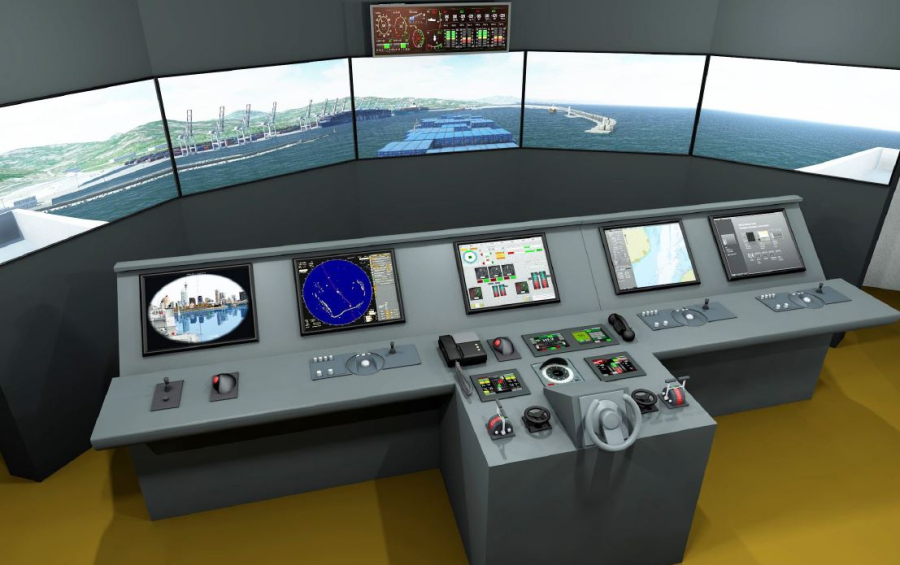
Technology group Wärtsilä will supply its simulator to global maritime service company NSB Group.
The simulator will be installed in NSB’s Maritime Training Centre in Buxtehude, Germany as part of a technical upgrade for the centre. The order was booked by Wärtsilä in February 2023.The simulator will feature the latest versions of Wärtsilä’s Navi-Trainer professional simulation software, as well as the latest NACOS Platinum bridge systems which include multi-pilot workstations for Electronic Chart Display and Information System (ECDIS), radar and conning applications.
The simulator is combined with a visualisation system, an Interactive Bridge Information Display (IBID) technology, a 55-inch (1.4-metre) voyage planning table connected to the main bridge, a video and audio recording and playback system, as well as a new sound system.
Tim Ponath, NSB’s CEO, said: “This upgrade will help us practice ‘what-if’ scenarios to meet our high standards in shipping and our ability to respond and improve in a very personalised way to meet the needs of our customers. Wärtsilä’s simulator makes it possible to connect different training centres in a way that has never been done before. After the first opening in 2007, we now again have a sophisticated stand-alone training facility.”
Johan Ekvall, Head of Product Simulation & Training at Wärtsilä, commented: “The skills shortage is a real issue facing the maritime industry today. Since COVID-19, many have left the industry and new recruits are not coming in fast enough to replace them. It’s clear we need to be able to get mariners up to speed quickly and ensure they undergo robust training to maintain high standards. NSB Group does great work in bridging this gap and delivering enriching training programmes to students across shipping.”
Evgeny Vdovin, Director of Port Optimisation and Simulation at Wärtsilä added: “It’s exactly for this reason that we, at Wärtsilä, are pleased to support NSB Group with their commitment to safety, training and education by providing the vital technology that is helping to shape the crews of tomorrow.”
The new simulator complies with DNV Standard 0029 for maritime training centres. It will be used for the further training of officers, for briefings and familiarisation, and to prepare seafarers for promotions. The courses are designed to accommodate both NSB personnel and external trainees.
Rajnath Singh inaugurates Integrated Simulator Complex ‘Dhruv’
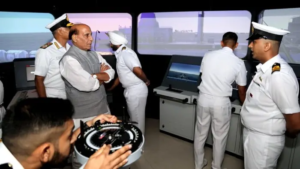
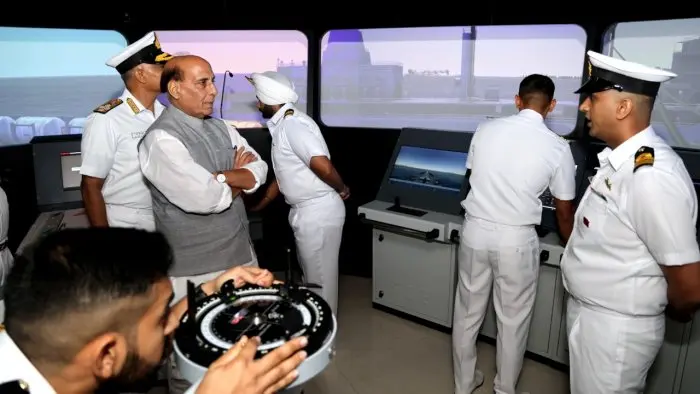
Raksha Mantri Shri Rajnath Singh inaugurated the Integrated Simulator Complex (ISC) ‘Dhruv’ at the Southern Naval Command in Kochi on June 21, 2023
Raksha Mantri Shri Rajnath Singh inaugurated the Integrated Simulator Complex (ISC) ‘Dhruv’ at the Southern Naval Command in Kochi on June 21, 2023. The ISC ‘Dhruv’ houses advanced, indigenous simulators designed to enhance practical training in the Indian Navy. This state-of-the-art facility is expected to provide real-time experience in navigation, fleet operations, and naval tactics, benefiting both Indian Navy personnel and trainees from friendly nations.Cutting-Edge Simulators in ‘Dhruv’
The ISC ‘Dhruv’ features a range of modern simulators aimed at enhancing practical training for naval personnel. These simulators will enable trainees to gain hands-on expertise in various aspects of naval operations. Among the simulators showcased during the inauguration were the Multi-Station Handling Simulator (MSSHS), Air Direction and Helicopter Control Simulator (ADHCS), and Astronavigation Dome.Advanced Ship Handling Simulators for Export
The ISC ‘Dhruv’ also boasts Ship Handling Simulators produced by (Applied Research International) ARI Pvt Ltd, New Delhi. These simulators have gained recognition on a global scale, as they have been exported to 18 countries. The export of these technologically advanced simulators not only demonstrates India’s self-reliance (Aatmanirbhar Bharat) in defence production but also highlights the nation’s potential as a significant player in defence exports.Astronavigation Dome: A First in the Indian Navy
The Astronavigation Dome, developed by Infovision Technologies Pvt Ltd, is a unique addition to the Indian Navy’s training infrastructure. This dome offers specialized training in astronavigation, a critical skill for naval personnel. Its introduction showcases the Indian Navy’s commitment to adopting advanced technologies and methodologies to strengthen its capabilities.Aatmanirbhar Bharat and Export Potential
The development of these indigenous simulators within the ISC ‘Dhruv’ reflects the spirit of the ‘Aatmanirbhar Bharat’ (self-reliant India) initiative. These cutting-edge simulators, designed and manufactured within the country, not only meet the Indian Navy’s training needs but also hold tremendous potential for defense exports. The Ship Handling Simulators produced by ARI Pvt Ltd have already gained significant traction in the international market, underscoring India’s prowess in defense technology.
VSTEP Further Expands to the Latin American Market with Inland Solution

Company Profile
Latincomp is the leading company in hydrography and naval electronics based in Asunción, Paraguay. They have been implementing innovative technology to meet the challenges of inland navigation in the Paraná-Paraguay waterway. VSTEP is ready for the next business step in becoming a market leader in training solutions in Latincomp’s home market.Overview of the Agreement
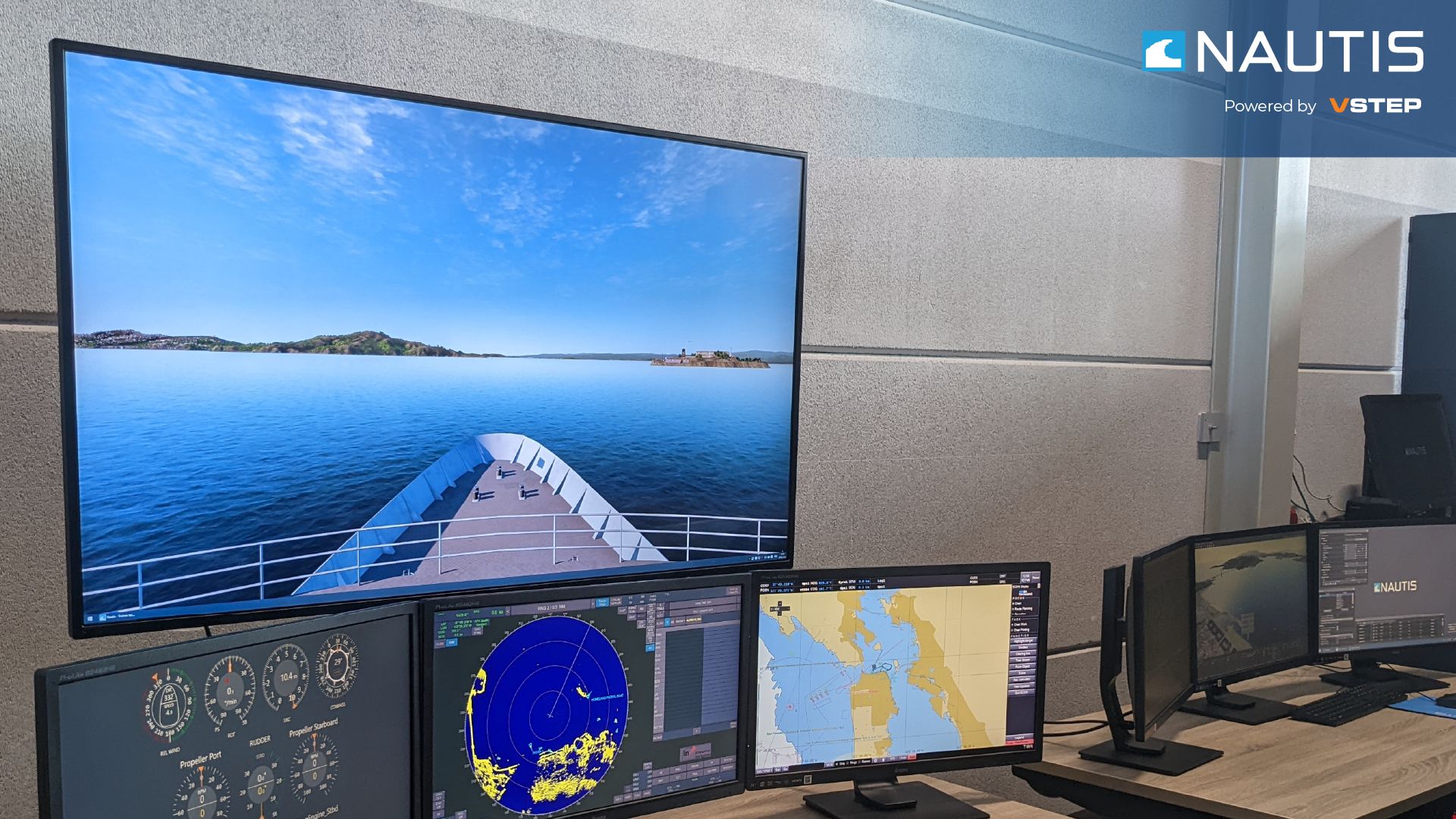
VSTEP is very flexible and advises clients in their best interest. For Latincomp, it was more economical to source the hardware from a local supplier and obtain only NAUTIS software from VSTEP.Therefore, Latincomp purchased NAUTIS software of 4x Pro Desktop simulators and one Instructor Station. The customer has also requested custom content including ship models and other features to meet the specifics of this market. VSTEP is excited to get started!
Collaboration with Latincomp
“As a business, it’s important for us to build solid and stable relationships that are based on collaboration. We are proud that our customers can rely on our expertise and consultancy. We, in turn, get a high degree of satisfaction if we know that our customer is happy and content with the advised solution.”
– Ritchie van der Ziel, Business Developer at VSTEPAndres Gibson, Project Manager at Latincomp, shares:
“We are very happy with how flexible VSTEP is. We were looking for a partner, not just a transaction or a company that would sell us a software or hardware. For us, it was essential to collaborate and arrive at the solution together. We appreciate the consultancy and knowledge of VSTEP that enables us to continue evolving our educational offerings.”VSTEP visited Latincomp for the Navegistic boat show in November 2022. On top of that, VSTEP believes that truthfulness is the foundation of any successful partnership, and that’s why VSTEP makes it a priority to always be upfront and honest with our customers. In the case of Latincomp, them being a local ECDIS supplier means that it is not viable to include ECDIS in VSTEP’s offering.
VSTEP Launches Simulator That Makes Ship Simulation Easily Accessible
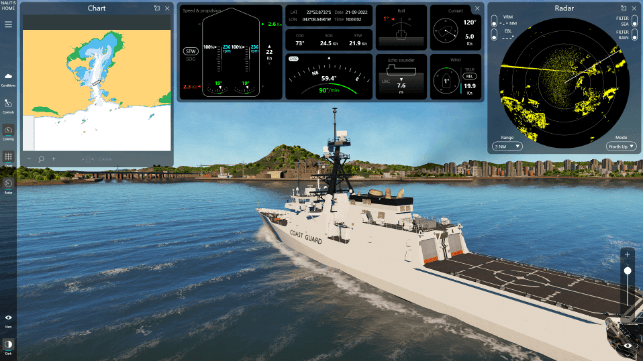
VSTEP launched their latest maritime simulator NAUTIS Home for maritime professionals, students, or enthusiasts. Making ship simulation available on a large scale brings them closer to their goal; to ensure that simulation-based learning becomes a vital part in maritime education and training.
Simulation-based learning has been applied to a great extent in a variety of fields such as aviation and healthcare. In the maritime industry, simulation training has not yet obtained that equal role compared to other industries, whilst learning by simulation holds great value when it comes to the development and training of skills for maritime professionals.
“Simulation-based training is essential when it comes to improving the safety, efficiency and sustainability of the maritime industry,” says Fabian van den Berg, Chief Executive Officer of VSTEP. The maritime industry is evolving constantly, powering innovation but simultaneously bringing new challenges to the surface. Van den Berg continues, “Technological advances are pushing maritime professionals and future seafarers to learn and train new skills and competences. Simulation-based learning can assist to prepare the maritime professionals, especially in the current market with a shortage of qualified personnel.”
On-premises maritime simulators already play a crucial role in providing the right training value in maritime education. However, until now, ship simulation was mostly accessible at larger simulator set- ups at schools, organizations or training centers for maritime students or professionals. “We want to enable learning by simulation in the maritime industry,” states Van den Berg, “Which is why we aim to expand the accessibility of professional ship simulation towards a scalable, non-location bound product.”
VSTEP just launched their new maritime simulation solution NAUTIS Home in Early Access, aiming for a feature complete product by the end of 2023. NAUTIS Home offers an immersive simulation experience with realistic hydrodynamics to mimic true to nature vessel behavior. The software is based on their professional maritime software NAUTIS, which is used for large simulator set-ups for schools and training centers. NAUTIS Home contains standardized content for individual sailing, training, and assessment.
Kongsberg Wins Large Contract with South Metropolitan TAFE
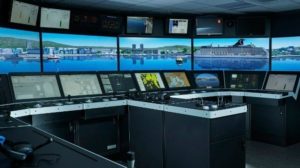
Kongsberg Digital (KDI) has won an important tender in which the company will supply an extensive range of maritime simulator solutions for the South Metropolitan TAFE (Technical and Further Education) institute in Fremantle, Western Australia. Funded through the Department of Training and Workforce Development, this contract retains a long and valuable collaboration with SM TAFE, one of the largest and most influential maritime training institutes in Australia.
The new contract commits KDI to the delivery, installation and commissioning of a complete maritime simulator suite of hardware and software technology, replacing SM TAFE’s current maritime simulator systems. The contract also includes digital services enabling online simulation training through KDI’s K-Sim Connect platform, as well as ‘train the trainer’ courses and a five-year support & maintenance agreement.
The delivery, scheduled for Q2/Q3 2022, will include K-Sim Engine Simulators with one instructor station, 12 student stations and a High-Voltage Circuit Breaker Simulator, enabling the safe, realistic and efficient training of electrical engineering students and crew, fully meeting the STCW requirements.
On the ship handling side, a suite of K-Sim Navigation simulators will be delivered. This includes two DNV Class A and two DNV Class B bridges with DP (dynamic positioning) functionality, two instructor stations and an ECDIS and Ship Stability Simulator Laboratory featuring an instructor station and 12 student stations.
The contract was awarded to KDI through an open and competitive process. “We are very pleased to continue our strong alliance with South Metropolitan TAFE, which is widely recognized as an establishment of distinction, providing world-class courses and traineeships addressing the varied needs of the maritime industry,” says Andreas Jagtøyen, Executive Vice President Digital Ocean, in Kongsberg Digital.
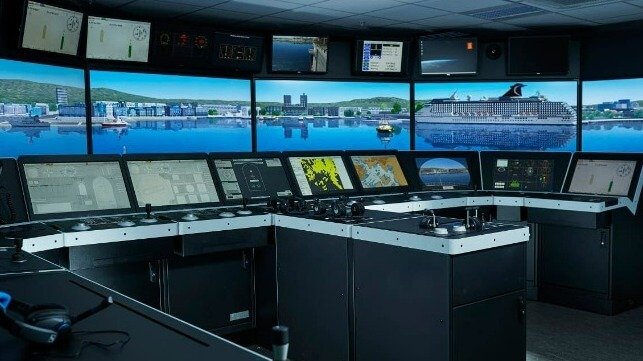
Wärtsilä Navigational Simulator becomes first Interactive ‘instructor-led’ cloud training solution to gain new DNV Class D Certification
Wärtsilä Voyage’s NTPRO (Navi-Trainer Professional 5000) navigational simulator has attained certification according to the new DNV Class D standard for cloud-based simulators – making it the first certified cloud solution that offers both interactive instructor-led and student-led training. With this, the navigational simulator now has full compliance (Class A, B, C, D) with DNV’s ST-0033 Maritime Simulator Systems standard.
As the maritime industry works to identify what learning events can be effectively conducted remotely and what requires a physical presence or team interactions at a training facility, Wärtsilä Cloud solutions are certified to provide both the interactive exercise control required for mandatory (STCW) training and examination, as well as the self-directed detached exercise and assessment that can be undertaken to enhance or supplement Instructor controlled simulations. Together these simulation solutions and associated value-added services equip the training providers with all the tools needed to develop effective and targeted blended learning courses that can be considered for flag or other industry approvals.
“The Class D cloud simulator standards are essentially the same as the Class C classroom simulator standards. Since we use the same technology platforms in our Cloud Simulation solutions as we do for physical classroom Class C simulators, and provide both instructor-led as well as self-directed exercises, we already had all the necessary functional to meet and exceed the simulator standards for STCW as well as more advanced training applications,” says Johan Ekvall, Head of Product, Simulation and Training at Wärtsilä Voyage.
Moreover, Wärtsilä Voyage’s Cloud Simulation is a managed service that has received Product Certification from DNV, meaning that training providers using the service do not need to apply for a ‘Product Certificate’ themselves as they typically do with a physical simulator in their training centre.
Official recognition of cloud-learning efficacy
The stringent lockdown measures during the pandemic accelerated the adoption of cloud training services in the last one and a half years. And given the enormous flexibility and efficiency it inherently creates, Wärtsilä Voyage expects cloud-based simulator solutions to become an industry staple.
“The new standard for cloud training only further facilitates realisation of the value created by remote simulation and learning. It represents a further positive step in the ongoing transition towards blended learning within the maritime educational industry, officially verifying that Wärtsilä online simulation meets or exceeds the already established, and globally recognised requirements for seafarer certification,” adds Ekvall.
“Enabling instruction and training courses via personal computers, laptops and mobile devices, from anywhere and at any time has considerably increased the possibilities for shipping companies, institutes and their learners, offering the utmost flexibility and efficiency in maritime training. We strongly believe blended learning platforms are the future of maritime training.”
Wärtsilä Voyage in brief
Wärtsilä Voyage transforms how vessels perform their voyage by leveraging the latest digital technologies to deliver a step-change in safety, efficiency, reliability, and emissions. We are committed to creating a Smart Marine Ecosystem, whereby every vessel can connect to digital services that make voyaging safer and greener. With the broadest Smart Marine portfolio in the market, we are well-positioned to lead the industry towards becoming digitally connected across the entire value chain and to be the first partner of choice when leveraging the latest digital technologies.
https://www.wartsila.com/marine/voyageWärtsilä in brief
Wärtsilä is a global leader in smart technologies and complete lifecycle solutions for the marine and energy markets. By emphasising sustainable innovation, total efficiency, and data analytics, Wärtsilä maximises the environmental and economic performance of the vessels and power plants of its customers. In 2020, Wärtsilä’s net sales totalled EUR 4.6 billion, with approximately 18,000 employees. The company has operations in over 200 locations in more than 70 countries around the world. Wärtsilä is listed on Nasdaq Helsinki.
www.wartsila.com
Panama Canal Authority Taps Kongsberg for New Navigation Simulators

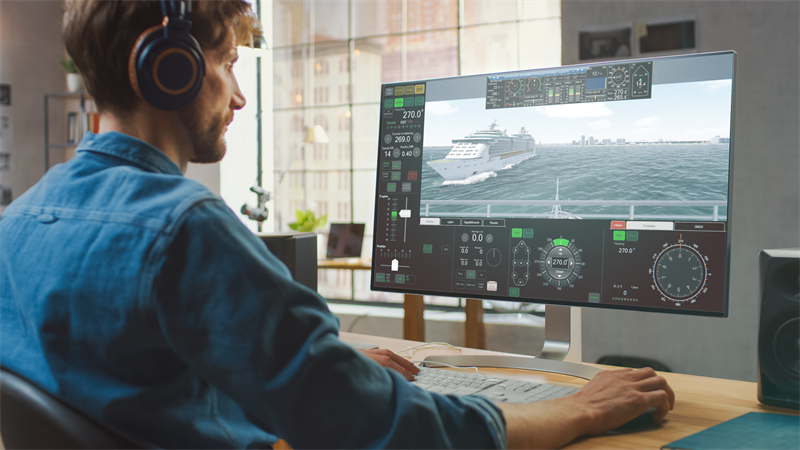
The Panama Canal Authority (ACP), which manages the 82 kilometers long Panama Canal that connects the Atlantic Ocean with the Pacific Ocean, has awarded Kongsberg Digital a contract to upgrade and extend the K-Sim Navigation simulators based in SIDMAR; the Center for Simulation, Research and Maritime Development of the Panama Canal Authority.
Equipped with the new technology, the Panama City-based center will be able to include multiple vessels in training scenarios and extend the realism of the simulator training provided for pilots and tug masters, Kongsberg Digital said, adding that the upgrade, scheduled for August 2021, would involve a broad scope of delivery.
The center’s main K-Sim Navigation simulator will be upgraded with new visual image generation and display/projection systems, and an array of new consoles and hardware (HW) panels.
In addition, Kongsberg Digital said, a unique new floor projection system will be installed to replicate the port and starboard views from the bridge wings. This feature will allow trainee officers on the main bridge to monitor the tugs and pilot boats in – for example – demanding port and tug maneuvering scenarios with vessels in close proximity.
Also, two new K-Sim Navigation bridge simulators are included with the delivery.
One will be configured specifically to duplicate a full-mission tugboat bridge with the capability of simulating various types of tug propulsion systems including Voith, Schottel, and Azimuthing Stern Drive (ASD).
“The 360° vertical displays on the new bridge simulators will enable student tug masters and pilots to train together with the crew members on the main bridge, while a new CCTV system and KONGSBERG’s award-winning instructor stations will make the creation and individual assessment of exercises more accurate than ever,” Kongsberg Digital said.
“We’ve enjoyed a fruitful working relationship with the Panama Canal Authority for many years,” adds Andreas Jagtøyen, EVP, Digital Ocean, Kongsberg Digital, “and it’s very satisfying to know that we can continue providing SIDMAR with our cutting-edge simulation technology, which now will be integrated for multi-vessel training scenarios. The commitment the Authority has shown with this large-scale K-Sim extension and upgrade confirms its faith in our simulation technology and bodes very well for our ongoing mutual development.”
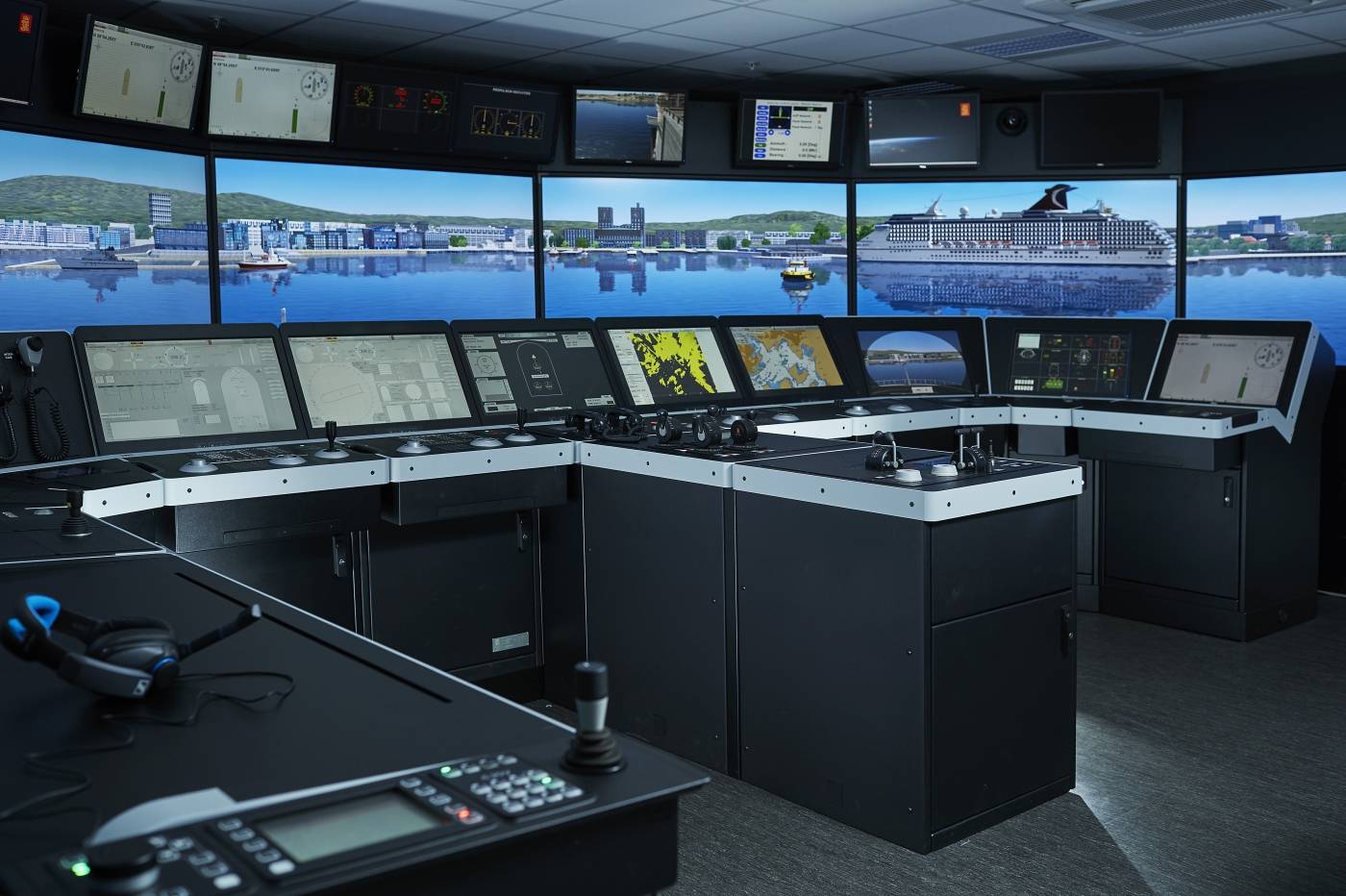
NAUTIS will start integrating innovative autodidactic tools within maritime simulation industry

NAUTIS Simulators will take your maritime training suite a step further in 2021 by introducing autodidactic tools to aid in maritime training.
Maritime training methodologies have been evolving radically over the past couple of years and the reliance on autodidactic or self-training technique has gained substantial admiration.
Education & Training Hence, the NAUTIS team at VSTEP is currently busy collaborating with Smart-Ship, a Delft based start-up that specializes in Haptic Feedback technology, to integrate haptics with NAUTIS maritime simulators. This integration will assist nautical students with their self-learning process.Haptic Feedback is an advanced technology that allows the user to receive tactile information by sending out various touch-based feedback. This technology is utilized by a vast range of industries ranging from gaming to medical to education and simulation. The usage of Haptic Feedback is even more prevalent in the modern automotive industry, guiding drivers in the form of vibration feedbacks when for example the driver pushes the accelerator or the break too hard or turns the steering wheel suddenly with excess strength. Maritime students and trainees undergoing training with NAUTIS Simulators will now also be able to train with the help of haptics, which would reduce the need for an instructor. This will guide them through their navigation journey by providing direction & input in the form of telegraph, helm guidance assistance, vibrations, sounds or light.
Advantages of Haptic Feedback
- Automated learning: Haptic Feedback controls provide guidance to its users on how to maneuver different types of vessels. Moreover, the advanced force-feedback system warns operators if their decisions may result in high-risk situations. This reduces dependency on instructors, making it cost effective and repeatable.
- Replay scenarios: The levers log all instructor and trainee input which allows for seamless replays of scenarios to increase effectiveness in learning. The software also enables ‘rewind’ to review and redo the exercises and assess the possible consequences.
- Customizable & remotely controllable: Haptic Feedback control can be integrated and used with all kinds of navigational simulators. Furthermore, the solution can be operated remotely which enables safe-distance training and limits unnecessary traveling.